Bluebirds & Nest Boxes
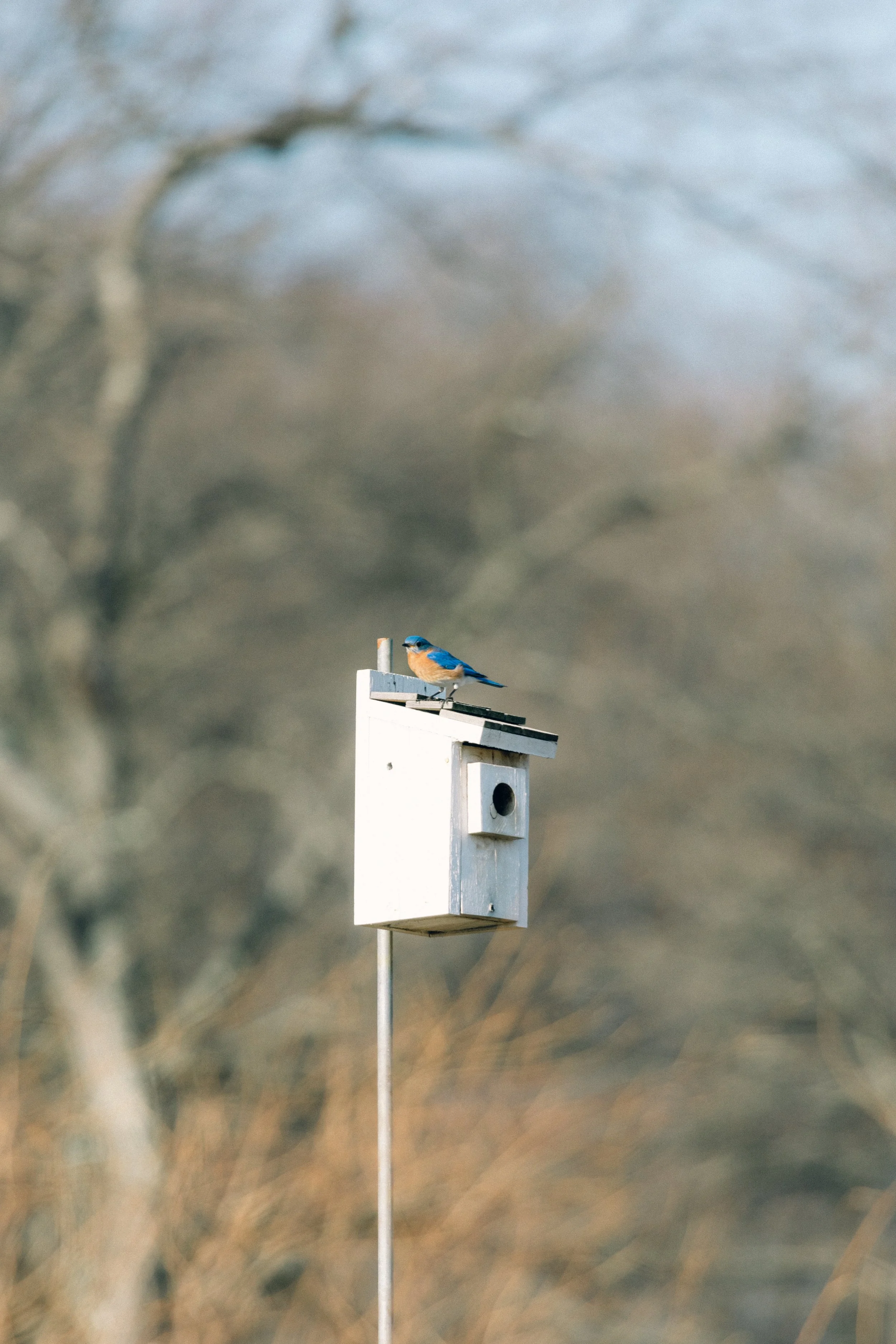
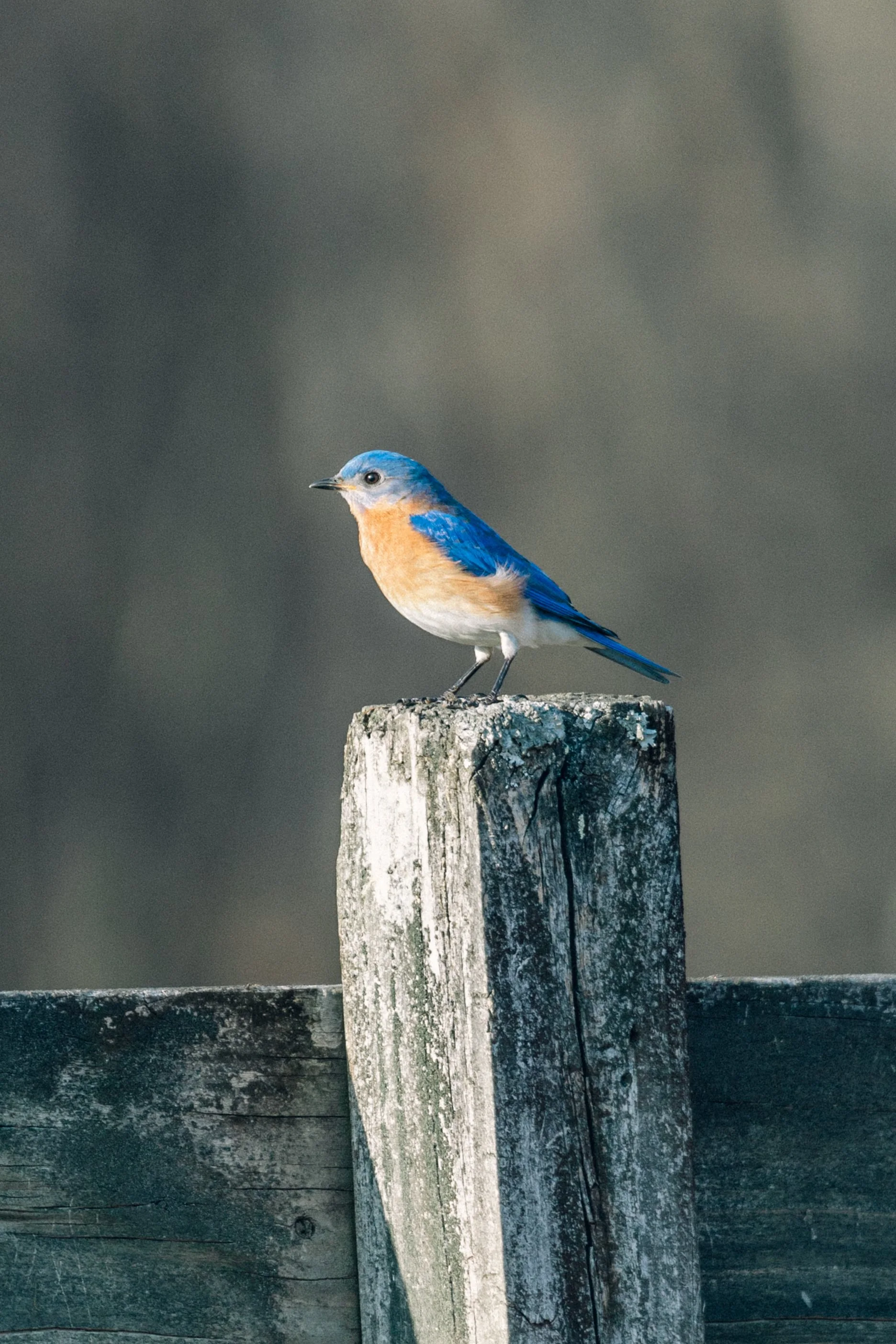
Have you heard a bluebird’s song?
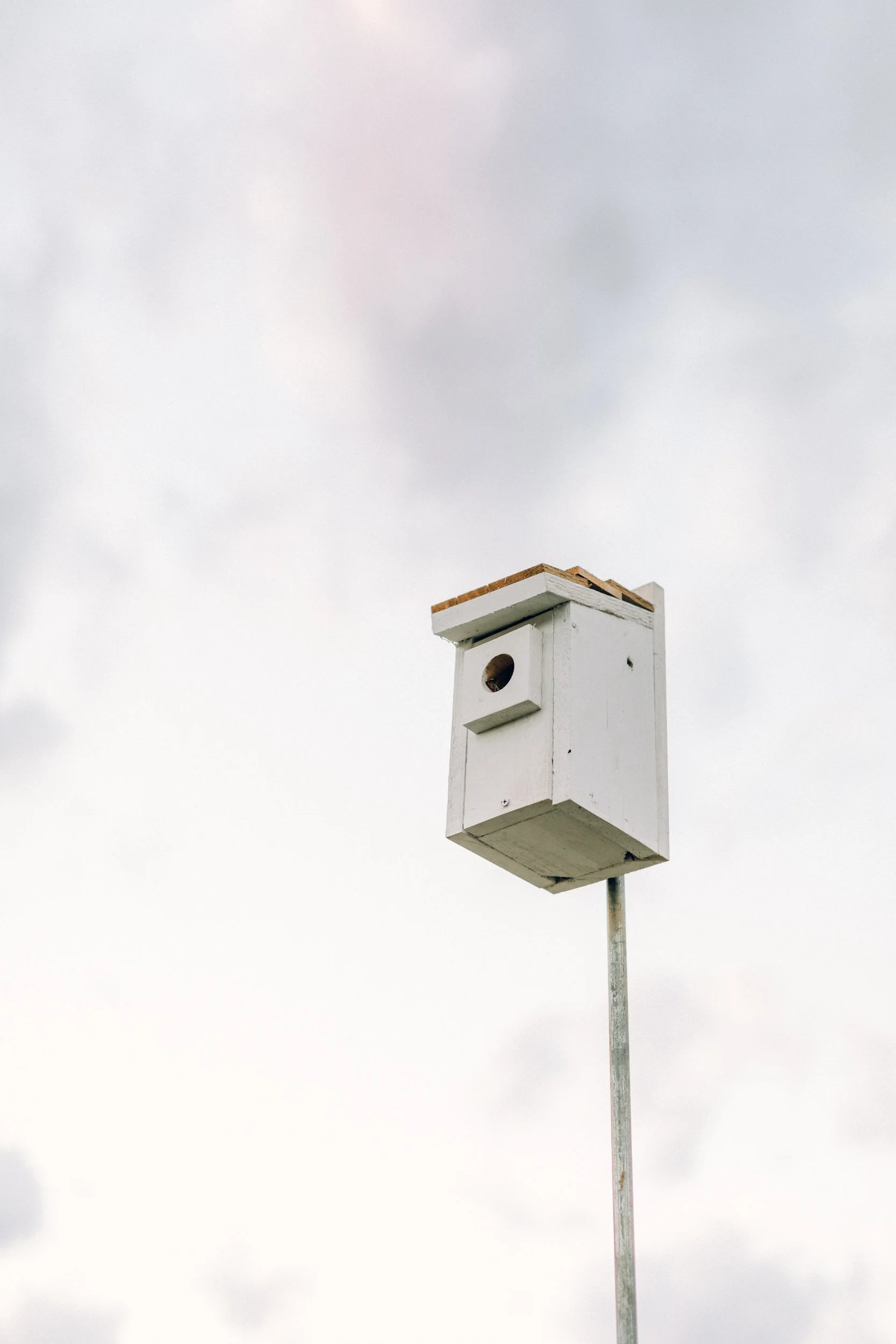
Or witnessed its striking colors, vibrant against the dull landscapes of late winter and early spring? How grateful I am to have a home where the bluebirds reside in abundance. I awake in the springtime and summertime to their soft, warbling tunes as they perch on the rooftop above my bedroom or on the nearby laundry line outside the window, surveying the grounds for breakfast treats to feed to busy nests full of babies. It’s that time of year now where we’ll very soon be seeing the nesting season pick up, and as a little way to give back to our birds for all the gifts they give us, our family has set up several nest boxes around the hillside meadow and near the woodland edges.
Time to Check and Clean
On the the to-do list for me by end of February/very beginning of March, is to clean out these nest boxes and inspect them for any tightening/repairs as winter comes to an end. I start the task by getting together some gloves, my garden spade for help in scraping out mud and old droppings, some glasses to protect my eyes from the dust and falling debris, a screwdriver for opening up the boxes and tightening any loose screws, and a step stool since I’m too short to reach!
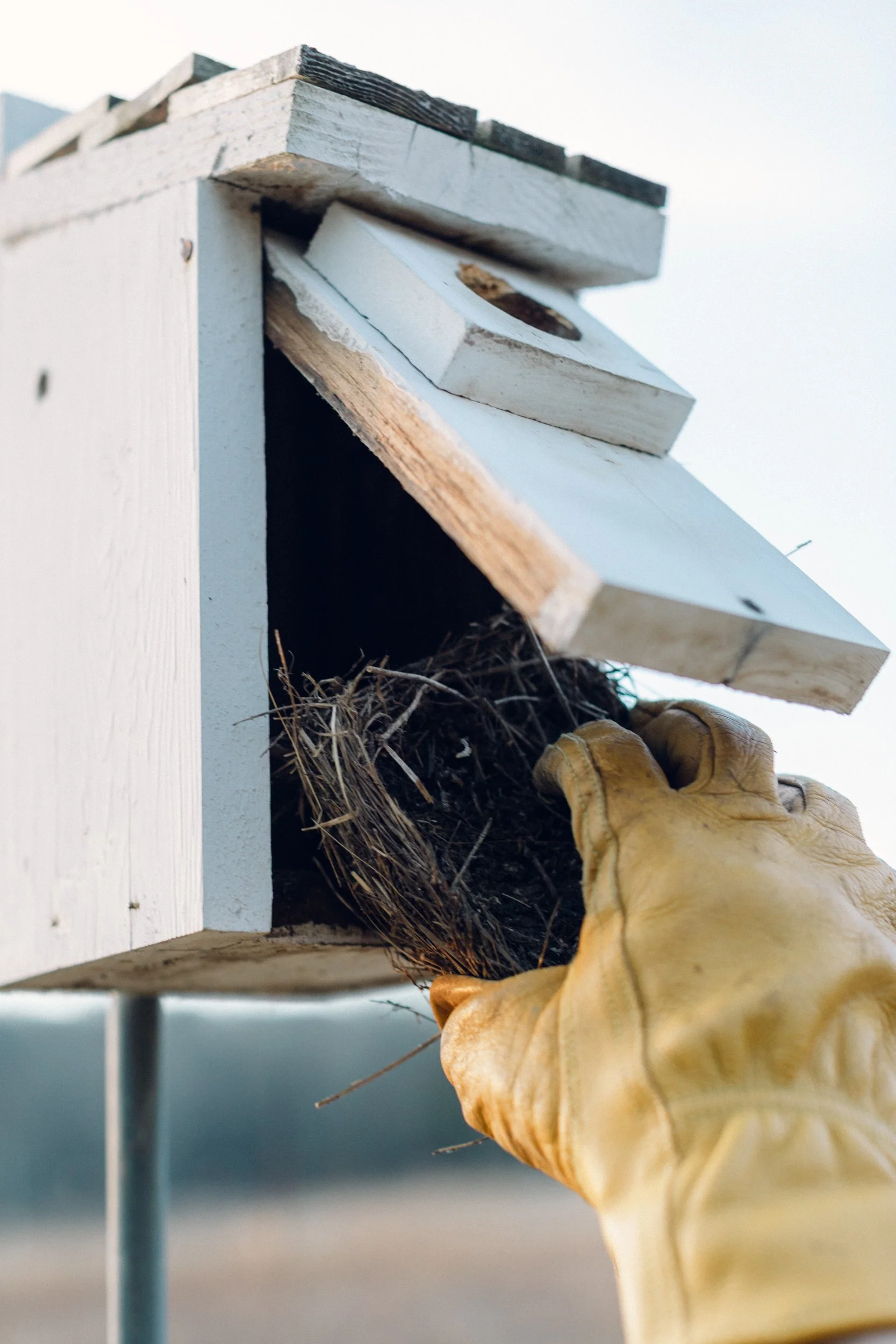
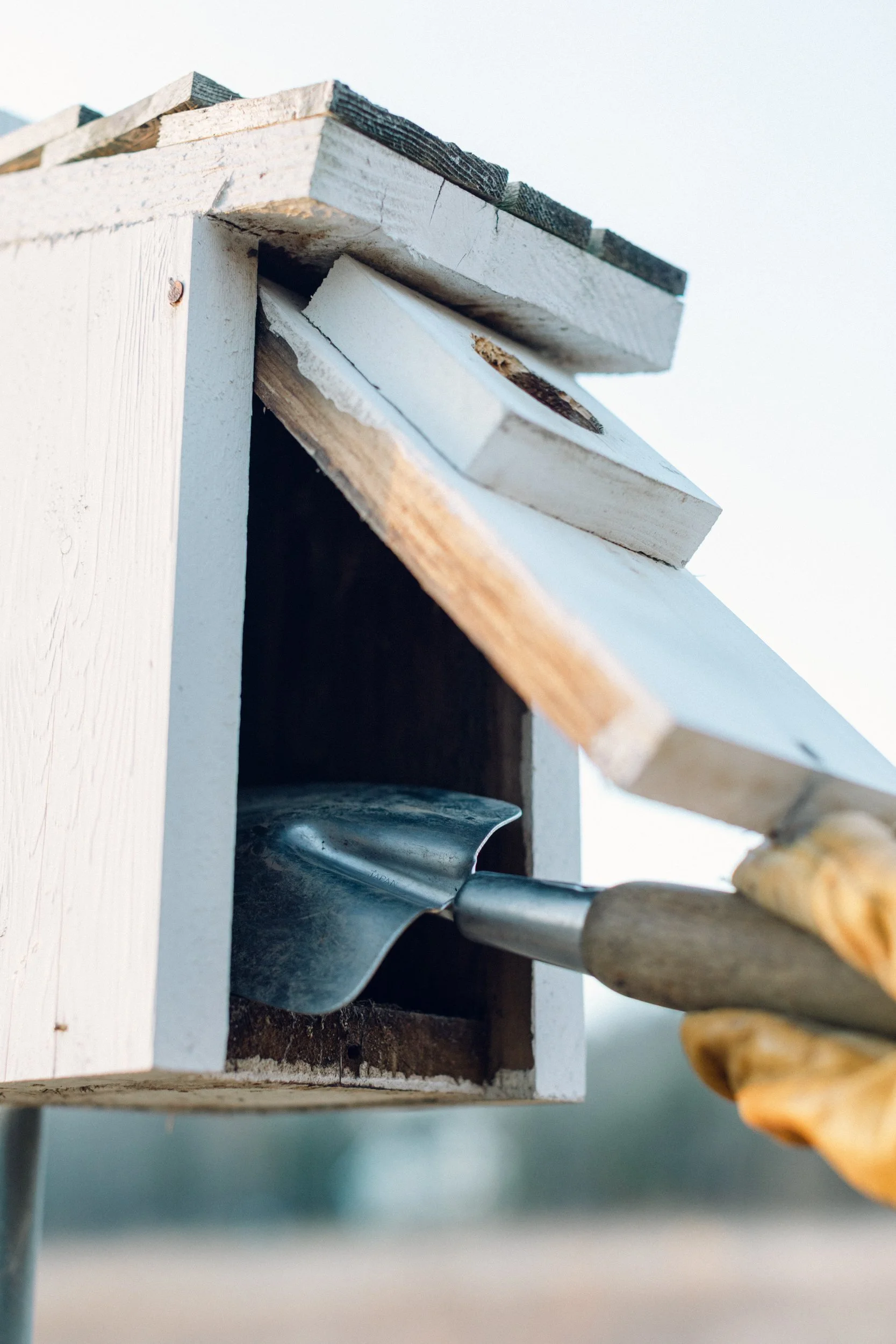
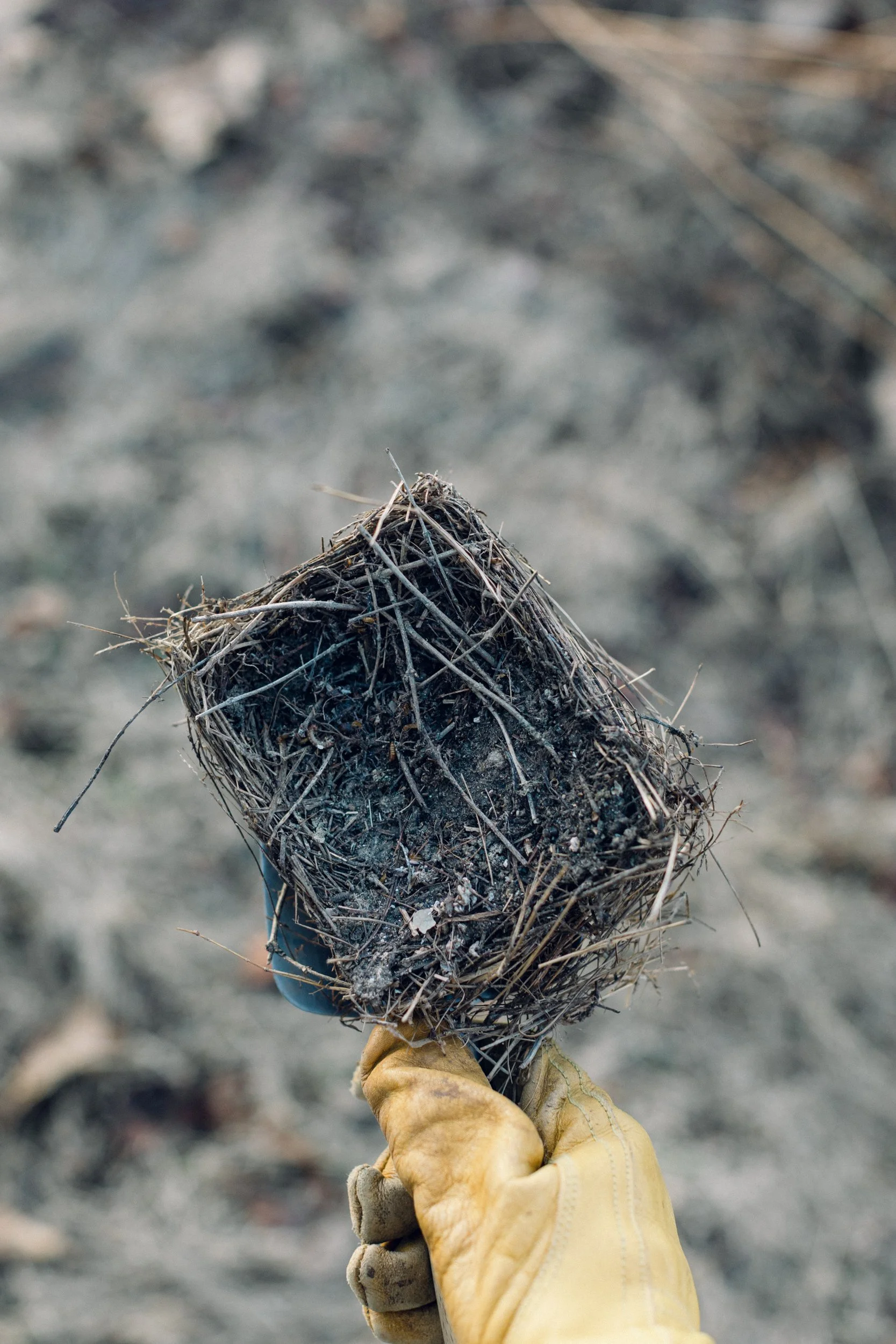

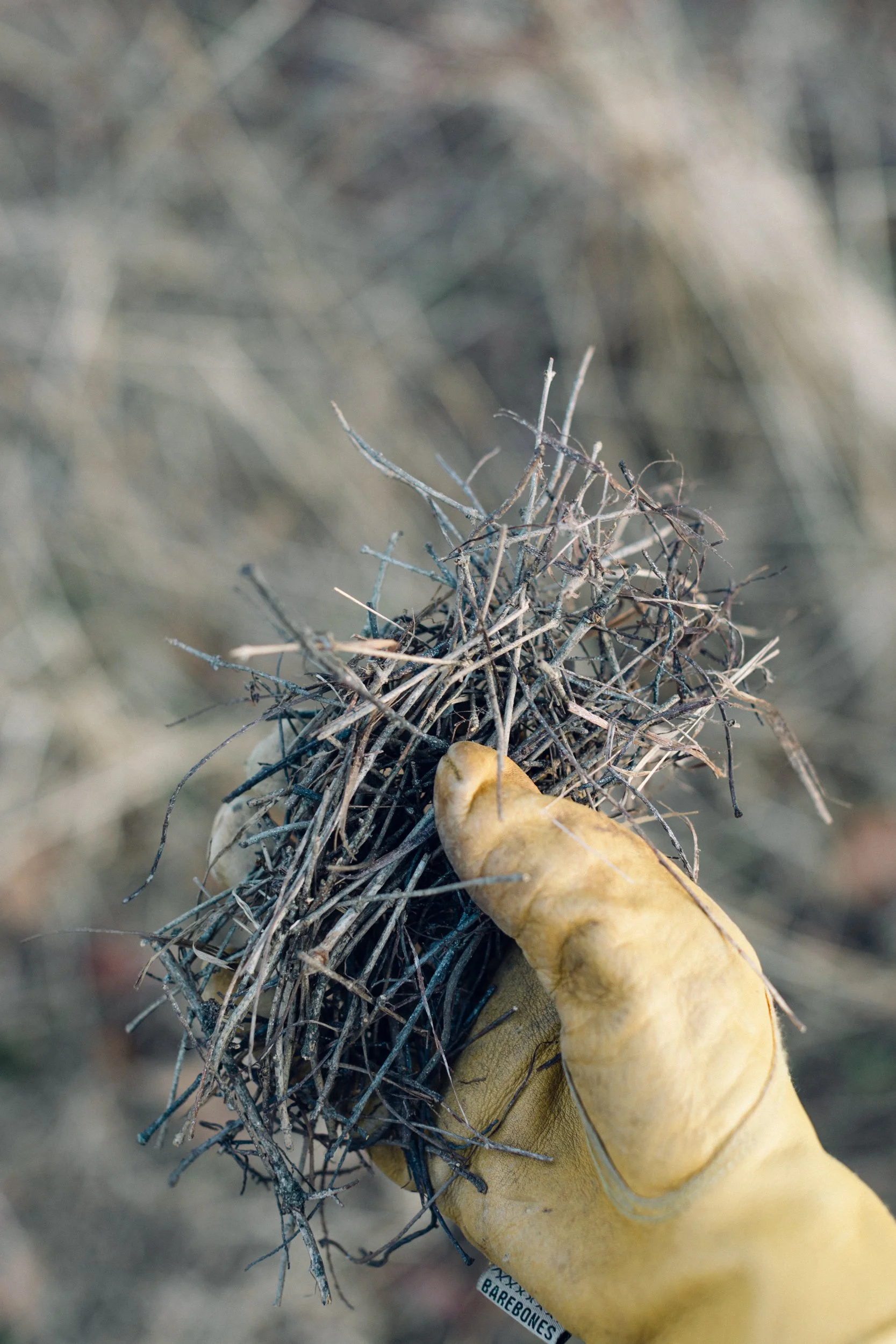
It’s always so interesting to see the ingredients and artistry of bird nests up close. Now these boxes were primarily used by Eastern bluebirds which I’ve seen like to use mostly mud, twigs, grasses, and pine needles in their nests around here, but we also had a tree swallow move into a box last summer and it was neat to see how it lined its nest with lots of soft, fluffy feathers and used more mud in the foundation. And one other species used a box after a bluebird family had fledged, a house wren, and it seemed to prefer to go quite heavy on the twigs and made a more loosely piled up twig and grass nest on top of the old bluebird nest nearly filling the box full (pictures of the smooshed bluebird nest and some of the wren’s twigs above). There’s lots to learn from looking in a nest box!
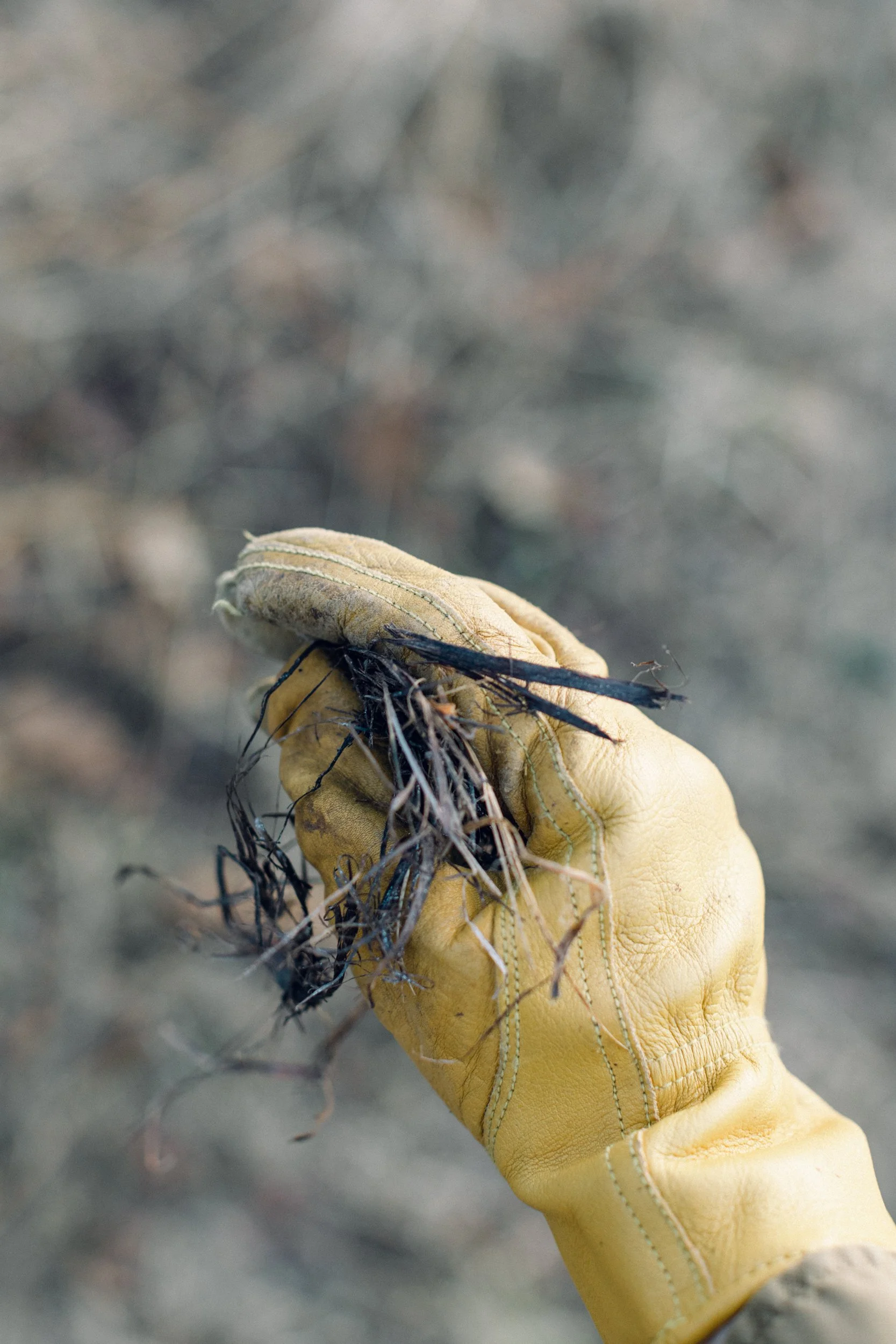
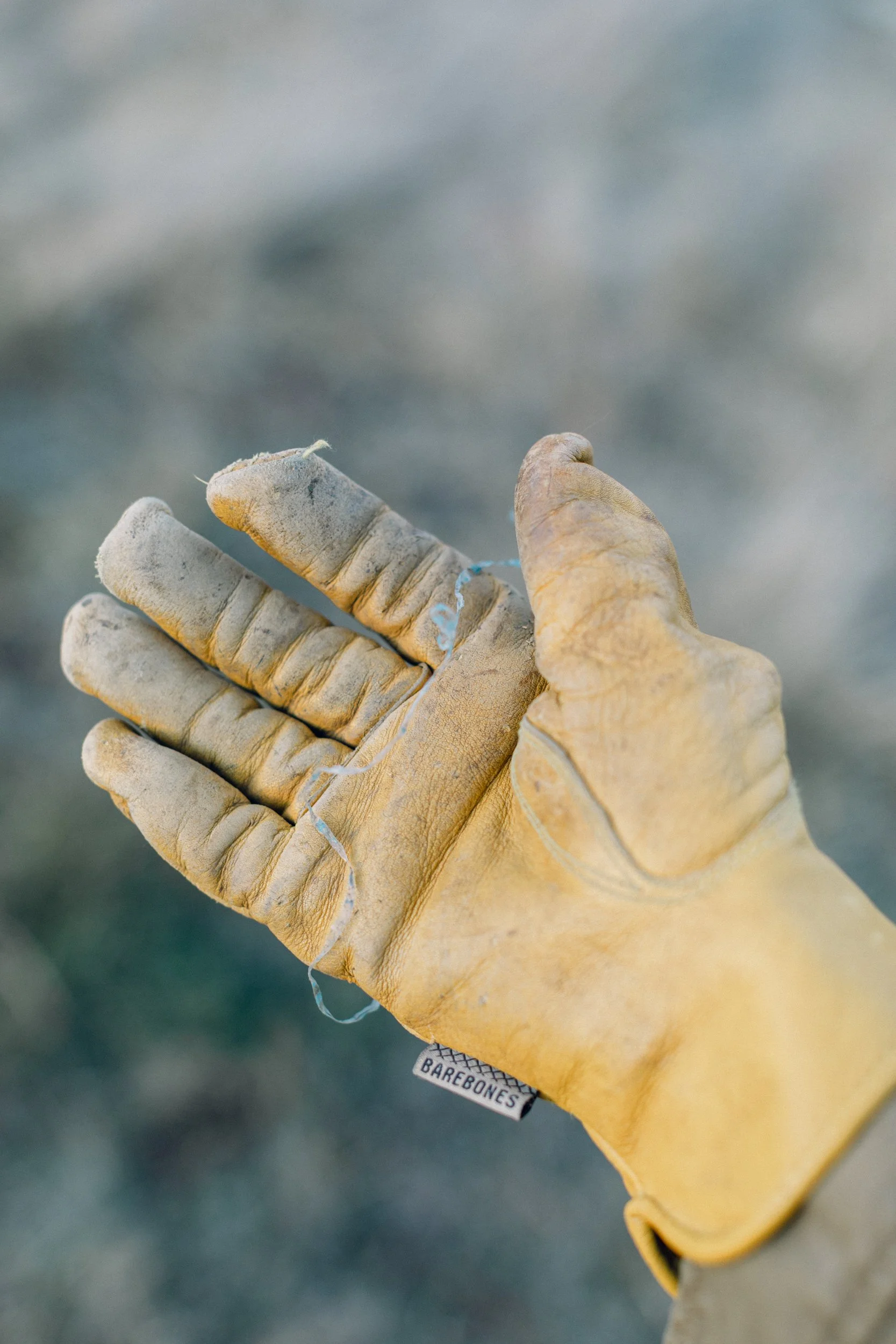
These photos here show some of the finer ingredients that lined the top of the house wren’s nest — mostly grapevine bark and grasses, and then what looks like a plastic bit from an old tarp. I discard the old nests right back to the earth, but this plastic bit and any other human litter bits I see I make sure to take back home with me to discard in the trash. Unfortunately nest ingredients like these made from non-biodegradable materials can be problematic and even potentially fatal for young birds causing entanglement, choking, or strangulation.
How We Mounted Our Boxes
After three summers now with no predation at all from ground predators, and them holding up well through our strong, strong winds and weather on our hill, I highly recommend the Gilbertson method for mounting which we implemented. Relatively low-cost, the materials it uses are:
1/2 inch metal conduit (recommended from various sources to be 5ft in length — we went slightly longer as our conduit was reused and already cut to about a 6-7ft length, this longer length though I have noticed a bit more sway in the winds, so the 5ft could be more stable)
1/2 inch rebar (at least 4ft in length)
1/2 inch conduit coupler with a longer screw for securing
And then we used 2 conduit straps to attach to the back of the nest box with screws made sure to not be too long to poke through the wood on the inside.
And the tools we used:
Angle-grinder for cutting metal rebar and/or conduit (may not be needed if you’re buying your metal materials new — usually you can request to have them cut to length there in-store)
Mallet for pounding rebar in the ground
Tape measure for making sure we were leaving around 24 inches of rebar above ground
Drill for pre-drilling holes for attaching the nest box to conduit straps
And a screw driver for securing conduit and nest box
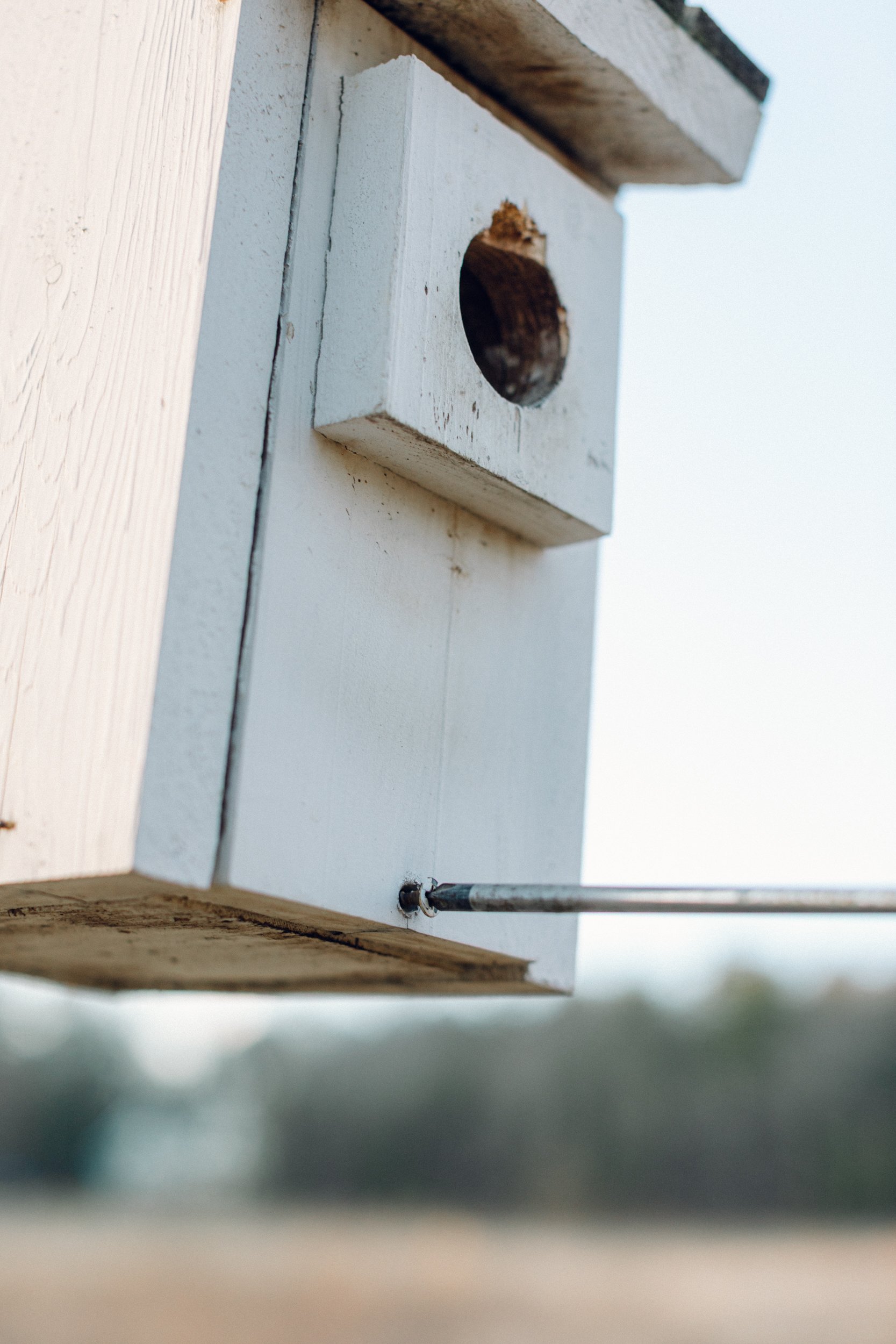
For full instructions, we followed this PDF illustration found on the Michigan Bluebird Society’s website. Here’s some photos from our installation below, we mounted a total of 5 boxes this way in early 2023.
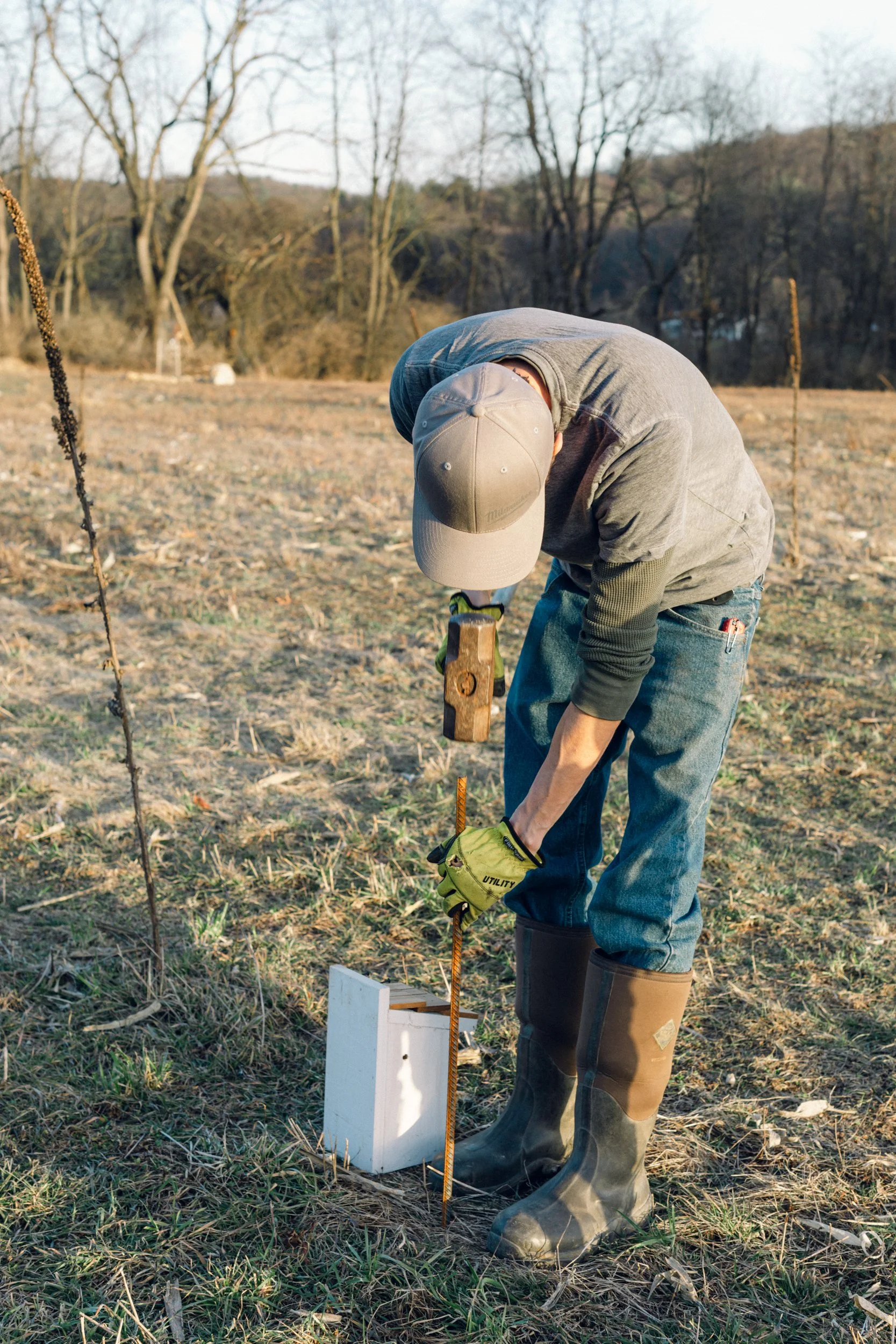
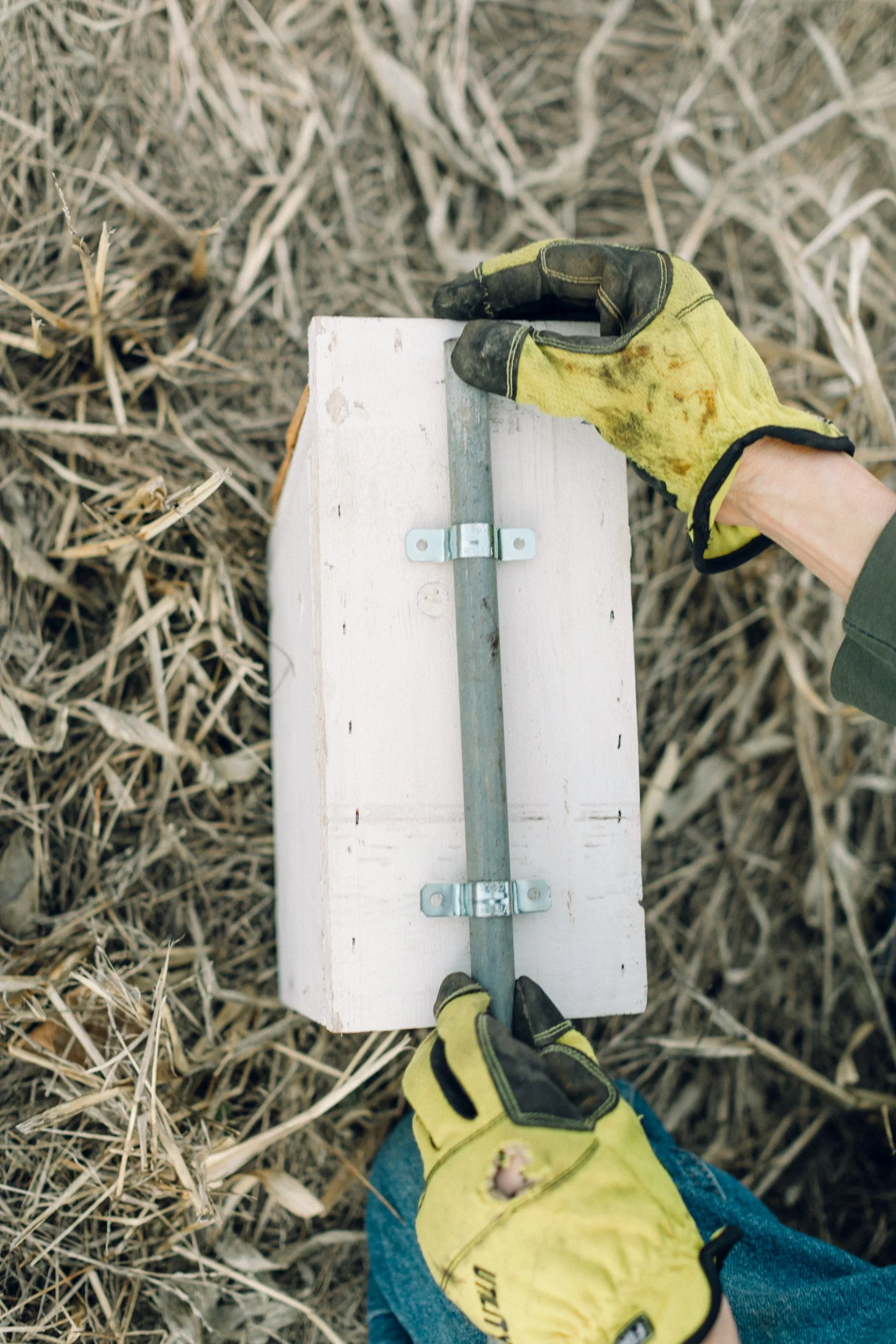
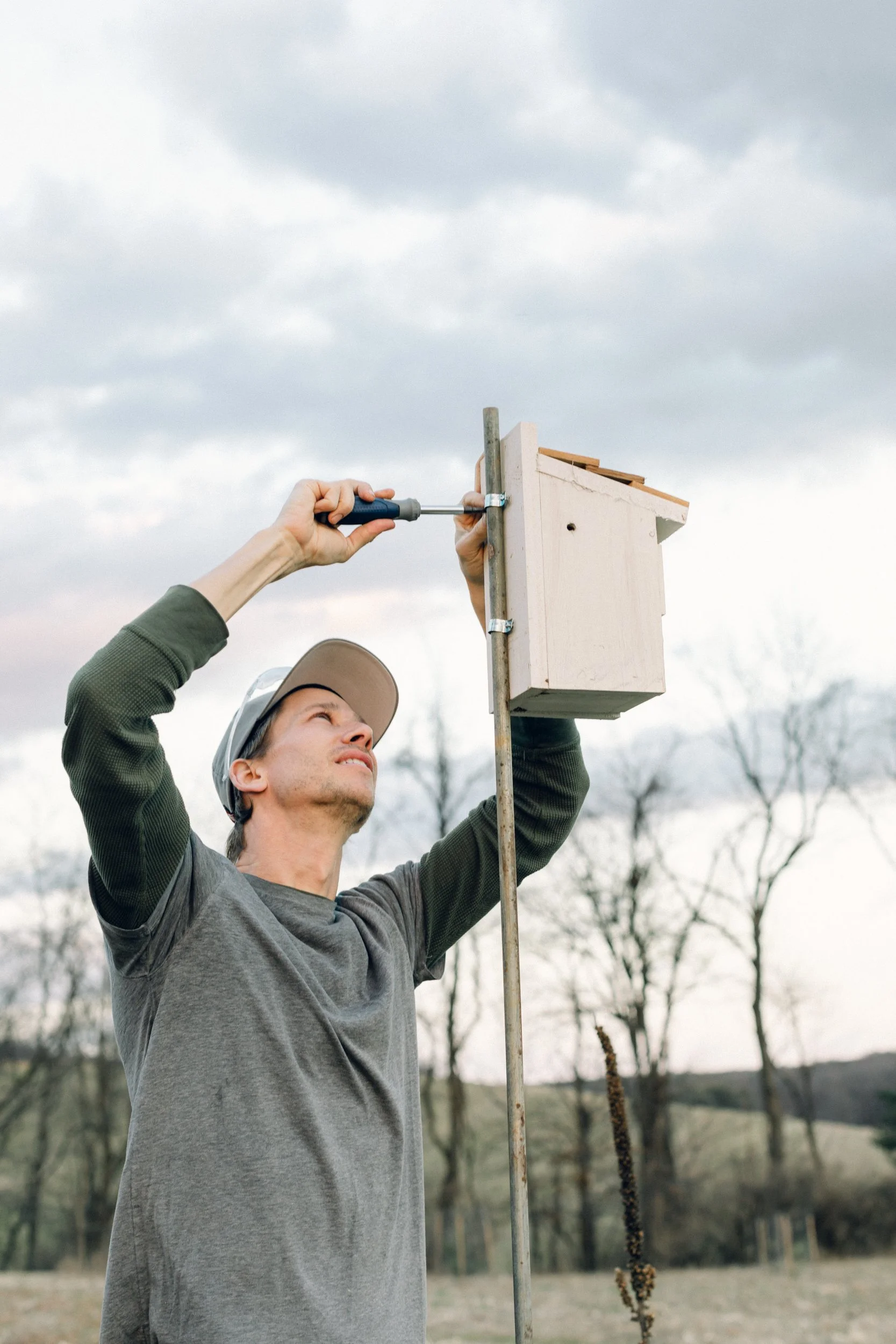
We have seen an absolute boom in our Eastern bluebird populations since installing these boxes, as well as swallows and wrens, and then sadly we also did have the invasive house sparrow discover our boxes as well and wreak havoc on our native birds the past couple of years. We’re still in the process of figuring out how to solve that issue, so will report back when we’ve found some more success with that (for now I was just diligent to destroy the house sparrow nests and they did eventually move on). But despite that setback, there still was lots of success and many native baby birds fledged throughout the summer.
How Nest Boxes Are Helpful
Did you know investing the time and efforts into installing nest boxes can be helpful not only to the birds, but to us humans as well? Having more birds around us is something to be thankful for, for many reasons.
For one, they aid in keeping our insect populations in check. All the bugs that like to feast on our gardens and plants are now that much more likely to be scooped up by the birds and fed to some hungry babies being raised safely in a nest box nearby. And even the bugs that feast on us, like mosquitoes, can be kept more in check too. Birds are also helpful in dispersal of native seeds and play an important part to our ecosystems’ health, and when suitable nesting habitat becomes more scarce, providing a nest box is a great way to help out our primary and secondary cavity nesters. And not only can boxes help them during the nesting seasons, but during the winter they provide useful shelter and protection from harsh weather too.
And then there’s the affect birds have on our well-being. Did you know listening to birdsong can reduce our cortisol levels, reducing symptoms of stress and anxiety and also even improve our focus? Birds can help to heal us!
There’s something beautiful and extraordinary too about observing birds building their nests, laying eggs, raising young, and watching them fledge and fly — it’s been a joy as a mom to share this with my son each summer. Our respectful and careful observations can also help scientists with studying bird population impacts and changes over time — you can learn more about joining a community, like Cornell Lab of Ornithology’s NestWatch, to contribute what you monitor in your nest boxes to research.
I’m greatly looking forward to the nesting season of 2026 beginning soon, and hope you are too!